
MX1 Review-Ichos(head-fi)

Small yet feature-rich and powerful
Pros: + Stellar audio performance for the category
+ Excellent technical performance for its class
+ Low digital glare and natural tonality
+ Stronger output than most competitors
+ Completely silent and interference-free
+ Minimal power draw
+ Three physical control buttons
+ Dual gain settings and 100-step volume control
+ App with customizable PEQ
+ Ultra lightweight and solid build
+ High-quality detachable cable
+ Great value for the price
Cons: – Glossy faceplates show fingerprints and scratch easily
– No option to change digital filters
– Sound quality doesn’t markedly surpass rivals
BGVP HiFi
BGVP HiFi, which stands for “Budget Good Value Product,” is a well-respected brand in the portable audio community. They have gained recognition for producing high-quality in-ear monitors (IEMs), earbuds, and audio accessories that combine advanced acoustic technology with accessible pricing. Among BGVP’s most popular and well-reviewed models are the BGVP Q3, BGVP DMA, and BGVP NS10, to name a few.
BGVP MX1
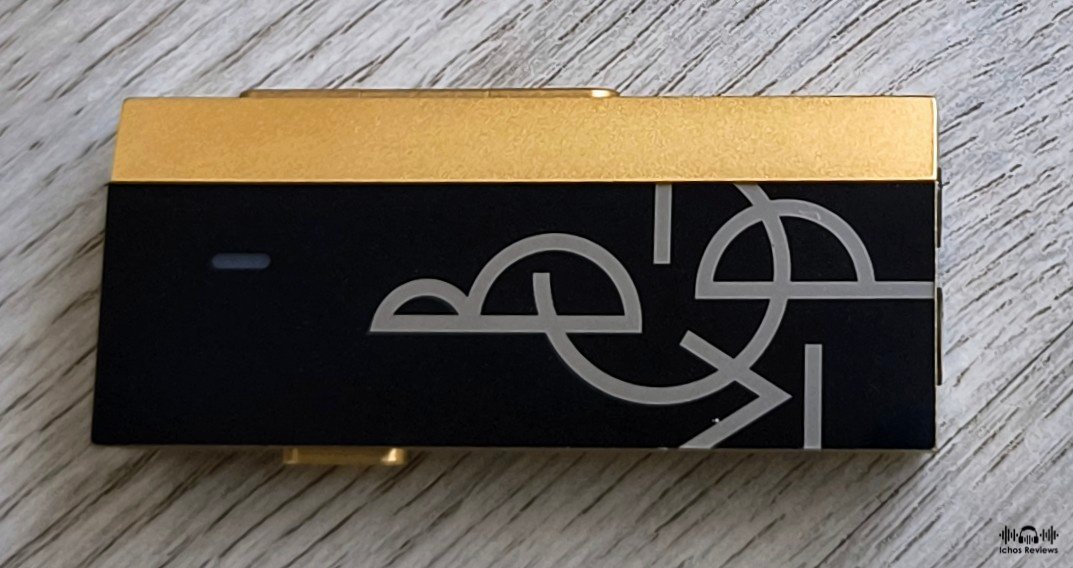
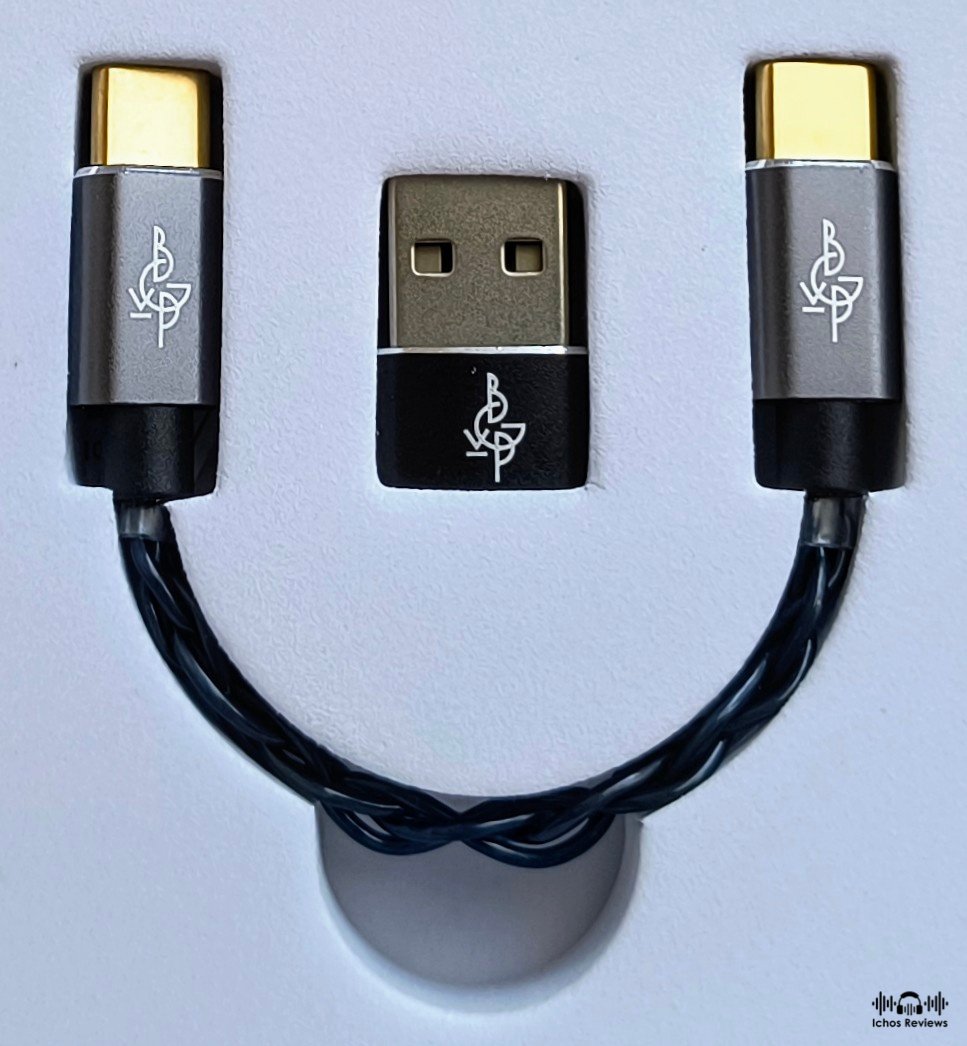
While BGVP is primarily known for manufacturing in-ear monitors, their product lineup also includes a selection of USB DAC cable adapters. The latest entry in this series is the BGVP MX1, a full-sized USB DAC dongle featuring a detachable cable and a balanced audio design.
The MX1 is equipped with dual CS43198 DAC chips, a high-precision femtosecond crystal oscillator, and an advanced power supply system with 9 separate rails for improved power distribution.
Nothing really revolutionary, the MX1 incorporates the same audio configuration found in many other comparable products. Let’s take a closer look at what makes it stand out.
Non Audio stuff
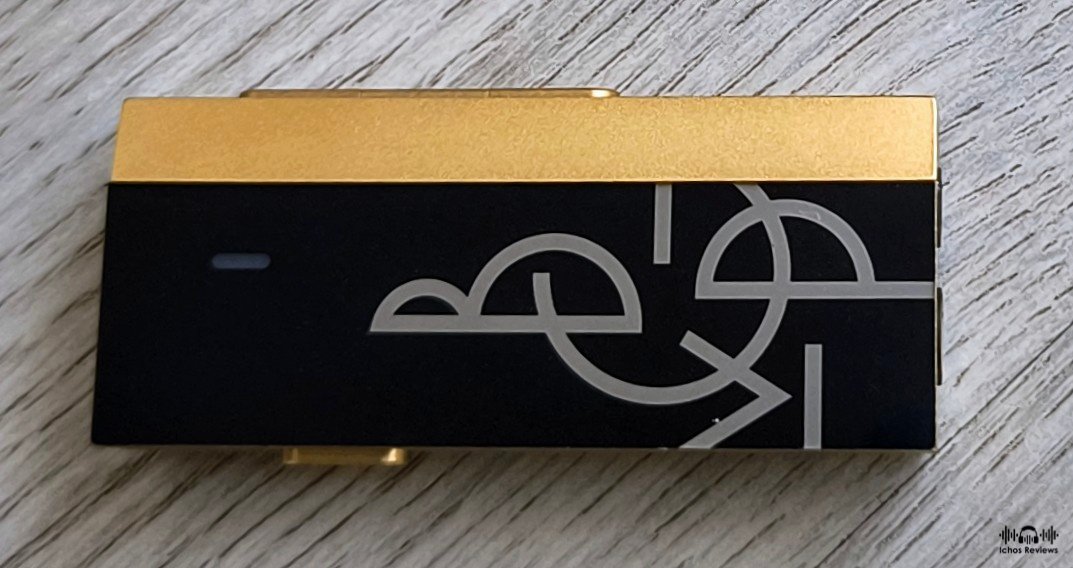
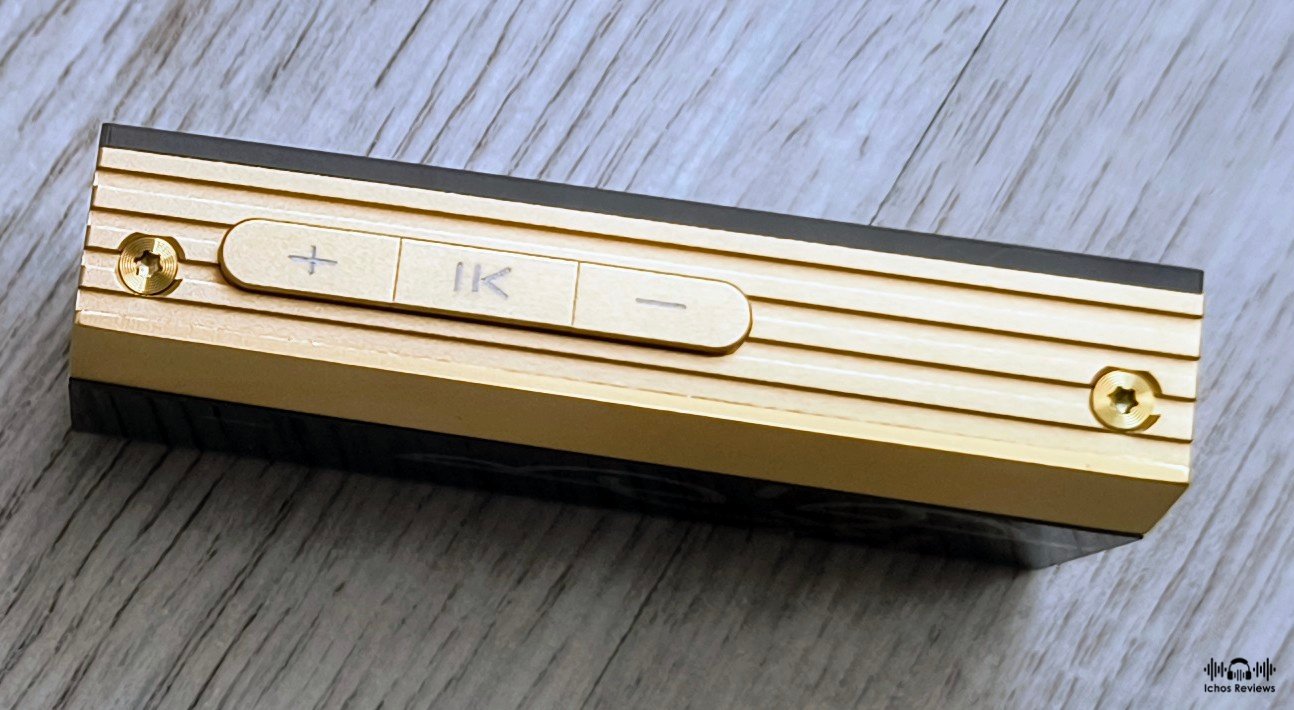
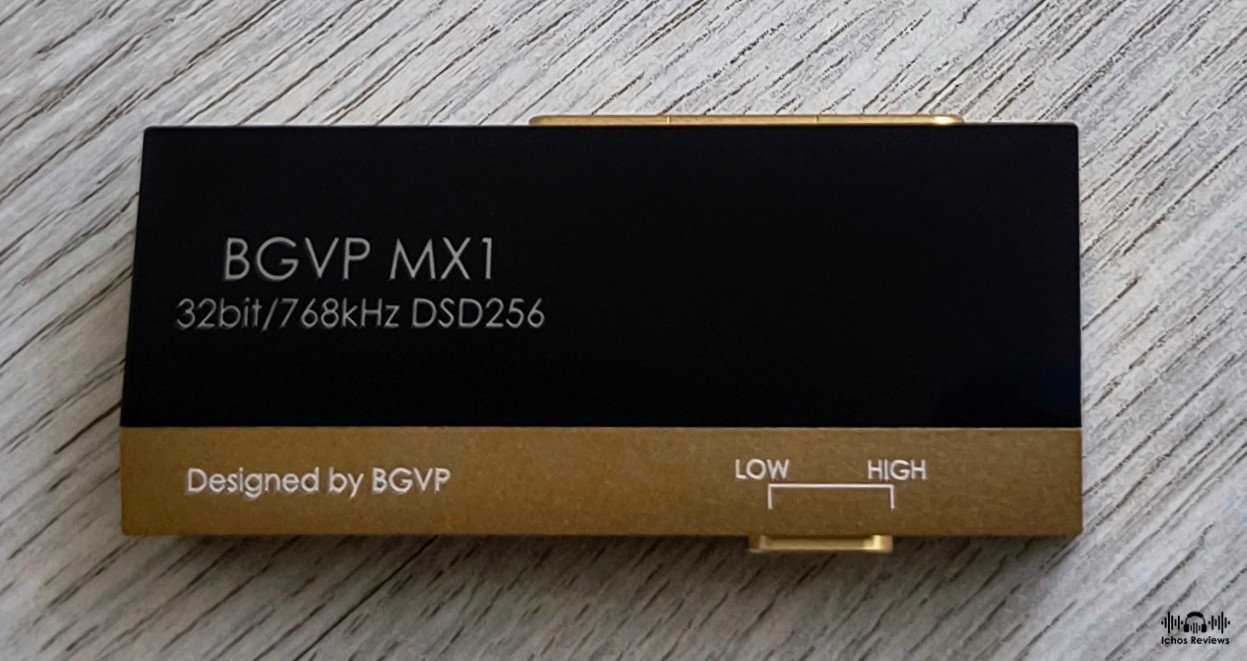
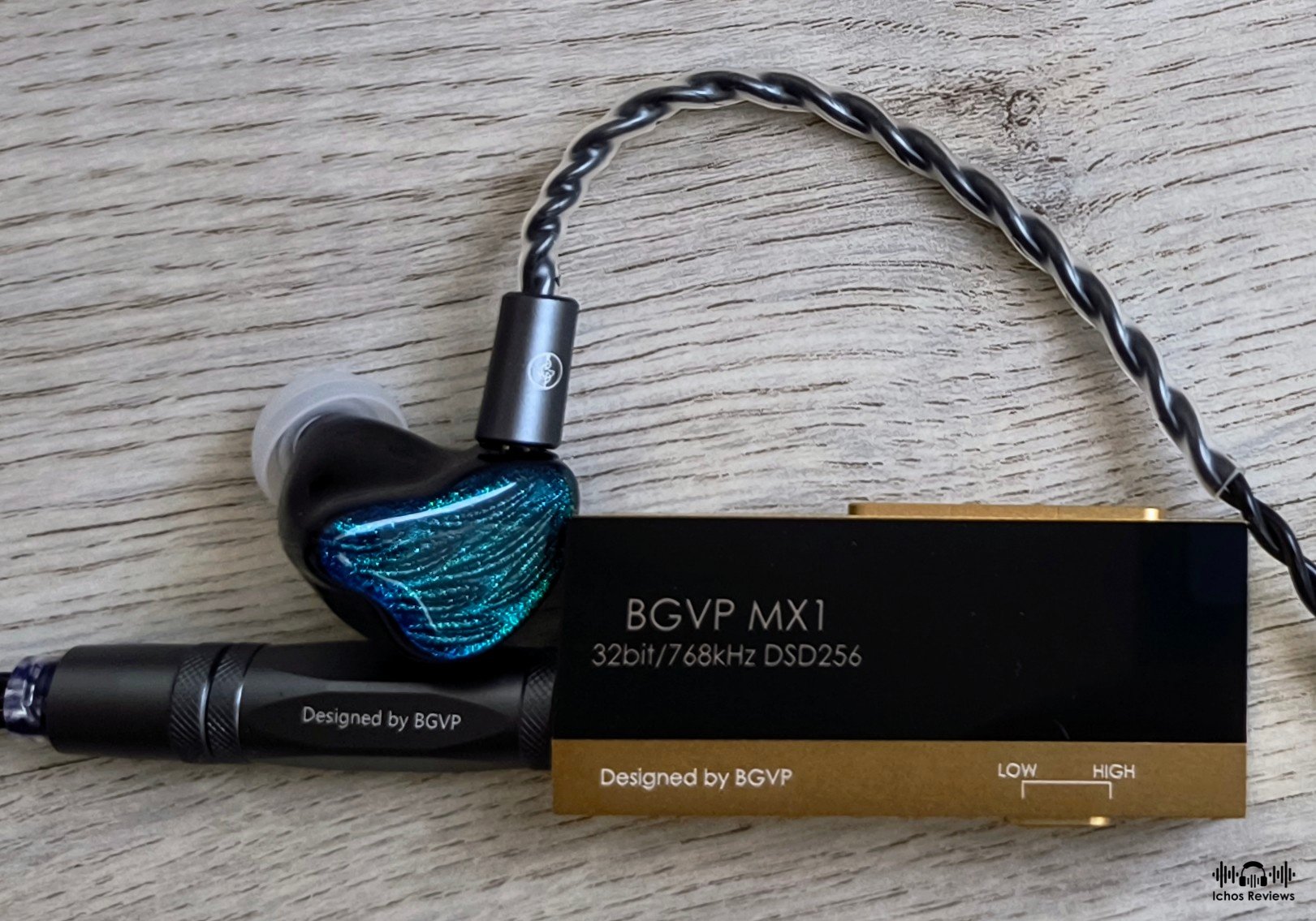
The BGVP MX1 sports a rectangular chassis with attractively angled surfaces and a symmetrical layout that enhances ergonomics. The front and rear panels are made of glossy, high-quality plastic inserts which add to the visual appeal but are susceptible to fingerprints and scratches.
Weighing in at just 16g, the MX1 is among the lightest USB DAC dongles of its size, making it especially suitable for mobile use without significantly increasing your carry weight. The sturdy aluminum body is available in dark grey or gold, featuring contrasting black faceplates engraved with the BGVP logo.
The MX1 is fully plug-and-play compatible with Android, Windows 10, Mac, HarmonyOS, and iOS. It supports PCM sampling rates up to 768kHz/32bit and DSD256. A small LED light indicates the device’s status: blue for standby, green for PCM decoding, and red for DSD.
The device offers 100 levels of independent volume control and includes two gain modes. It also supports earphones with in-line call and control capabilities.
A conveniently placed switch on one side toggles between high and low gain settings, while two separate buttons on the opposite side allow volume adjustment. A third multifunction button controls playback (play/pause and track skipping). BGVP has ensured that users can control playback functions directly on the MX1 without needing to access their smartphone.
The Walk Play Application
The BGVP MX1 is compatible with the Walk Play application, currently available for Android and HarmonyOS, with iOS support planned for a future release. The app is hosted on the Xiaomi and Vivo app stores and is not found in the official Google Play Store, but it can also be downloaded directly from the following link:
Alternatively, the application can be accessed on a PC via a browser using this URL: peq.szwalkplay.com
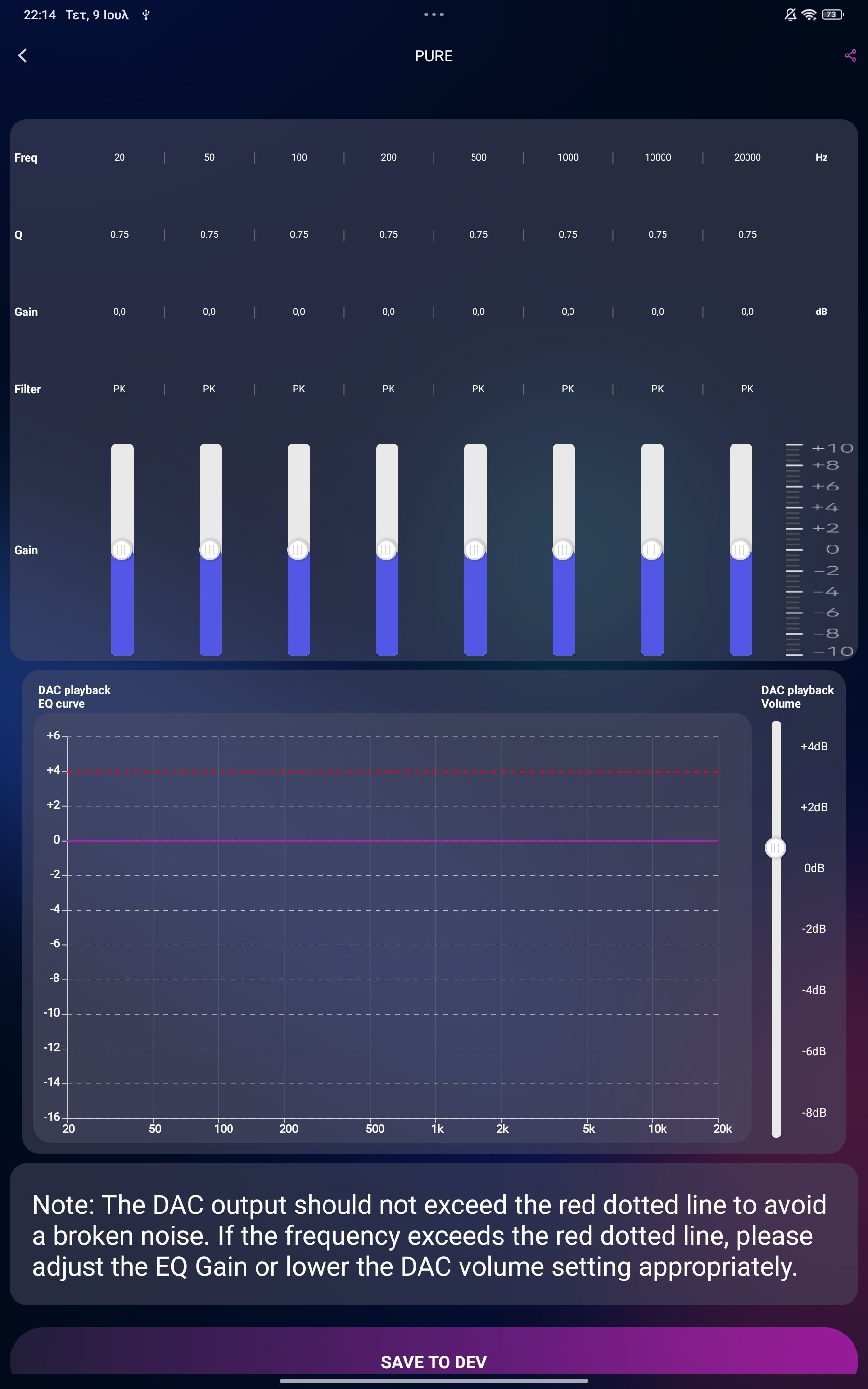
Walk Play allows users to update the firmware and use a fully customizable parametric equalizer (PEQ). The app includes 7 built-in EQ presets and an 8-band EQ for manual adjustment. Users can also import and export EQ settings to share with others. While I don’t have extensive experience with EQ customization, and thus can’t fully evaluate the app’s capabilities, the features it offers are promising.
Power Output and Efficiency
The BGVP MX1 delivers a power output of 320mW/32Ω (4Vrms) from the 4.4mm balanced output and 125mW/32Ω (2Vrms) from the 3.5mm single-ended output. These specifications place the MX1 among the most powerful USB DAC dongles in its class. For comparison, the ddHiFi TC44Pro E2 produces 250mW/32Ω, and the Hidizs S8 Pro outputs 160mW/32Ω.
Power consumption is impressively low: 0.03A/0.17W in standby, 0.06A/0.33W during music playback at low gain, and 0.07A/0.34W at high gain. As a result, the MX1 is highly efficient and will not rapidly deplete your phone’s battery. It only powers on and enters standby mode when earphones are connected—if nothing is plugged in, it remains inactive and consumes no power.
Testing was conducted with the BGVP Feather and ISN H60 earphones, as well as the Sivga Answer headphones. The MX1 stayed cool even under heavy usage and had ample power to drive efficient headphones. No background hiss or interference from mobile devices was detected.
Audio stuff
The BGVP MX1 offers excellent audio performance, on par with other USB DAC dongles using similar chipsets. Its frequency response is flat, and it delivers a neutral sound signature with a hint of warmth. Thanks to its dual CS43198 chips, the sound is highly transparent and free from distortion or a lack of clarity.
Bass performance is impressive—deep, quick, tight, and well-controlled, though not especially thick or heavy in texture. Its layering and definition are excellent, and it delivers more punch and impact than many competitors due to its high output power. There is plenty of headroom, and the MX1 has the capability to elevate the performance of your earphones.
The midrange is open and airy with clear articulation and strong separation. Clarity is abundant, and the sound remains natural rather than sterile. The timbre is realistic and the overall tone convincing. While it doesn’t offer an analog-style richness or nuanced harmonic detail, it is expressive and musically satisfying.
Treble is smooth, extended, and detailed, without any significant brightness or harshness. Although the MX1 does not allow you to select digital filters or use the CS43198’s NOS mode, the treble remains natural and free of harsh digital characteristics. The MX1 pairs well with both bright and warm-sounding earphones and performs well across all musical genres.
Its true balanced architecture contributes to an expansive soundstage with a good sense of width and precise imaging, particularly for a device in this price range. It easily adapts to the scale of music and conveys a spacious, uncongested presentation.
Conclusion
The BGVP MX1 is another USB DAC dongle that features the commonly used CS43198-based architecture and offers sonic performance that aligns with other products in the same category. While its sound quality may not be dramatically superior, it remains excellent.
That said, the MX1 brings several unique features that give it an edge over the competition: it’s extremely lightweight, powerful yet energy-efficient, includes three physical control buttons, supports two gain levels, and offers 100 volume steps. Additionally, it comes with an app that supports PEQ customization. Its pricing is attractive, and the build quality is solid, making the MX1 a compelling option worth considering.
——————————————————————————
The review sample was kindly provided free of charge in exchange for an honest review. I didn’t use affiliate links.
The price of the BGVP MX1 is $79 and you can buy it from BGVP or their official AliExpress shop.
Disclaimer: For various Google indexing reasons, most parts of this review have been processed with an automatic paragraph rewriting tool. However it reads exactly the same as the original content that is available in my website.

It’s great to see BGVP focusing on the technical side of things with the MX1—dual CS43198 DACs and a high-precision crystal oscillator are definitely promising features for any audiophile. I think it’s the little details, like the app with customizable PEQ, that will make the MX1 stand out in this category.
I find the inclusion of customizable PEQ through the app to be a great touch for users looking to fine-tune their audio experience. It’s a small but powerful feature that’s often overlooked in similarly priced products.
The MX1’s combination of a silent background, natural tonality, and stronger-than-usual output is especially impressive for such a lightweight device. I also like that it retains practical features like physical buttons, dual gain, 100-step volume, and app-based PEQ without adding much power draw.
thanks for your support~